Duty cycle
Fleet routes, return times, energy needs, and dispatch priorities drive the charging plan.
Workplace and fleet preview
Workplace amenity charging and fleet operations may share a parking lot, but they solve different problems. Start by separating employee or visitor use from vehicles with defined routes, shifts, energy needs, and departure deadlines.
Planning guidance first. Provider referral only with separate permission.
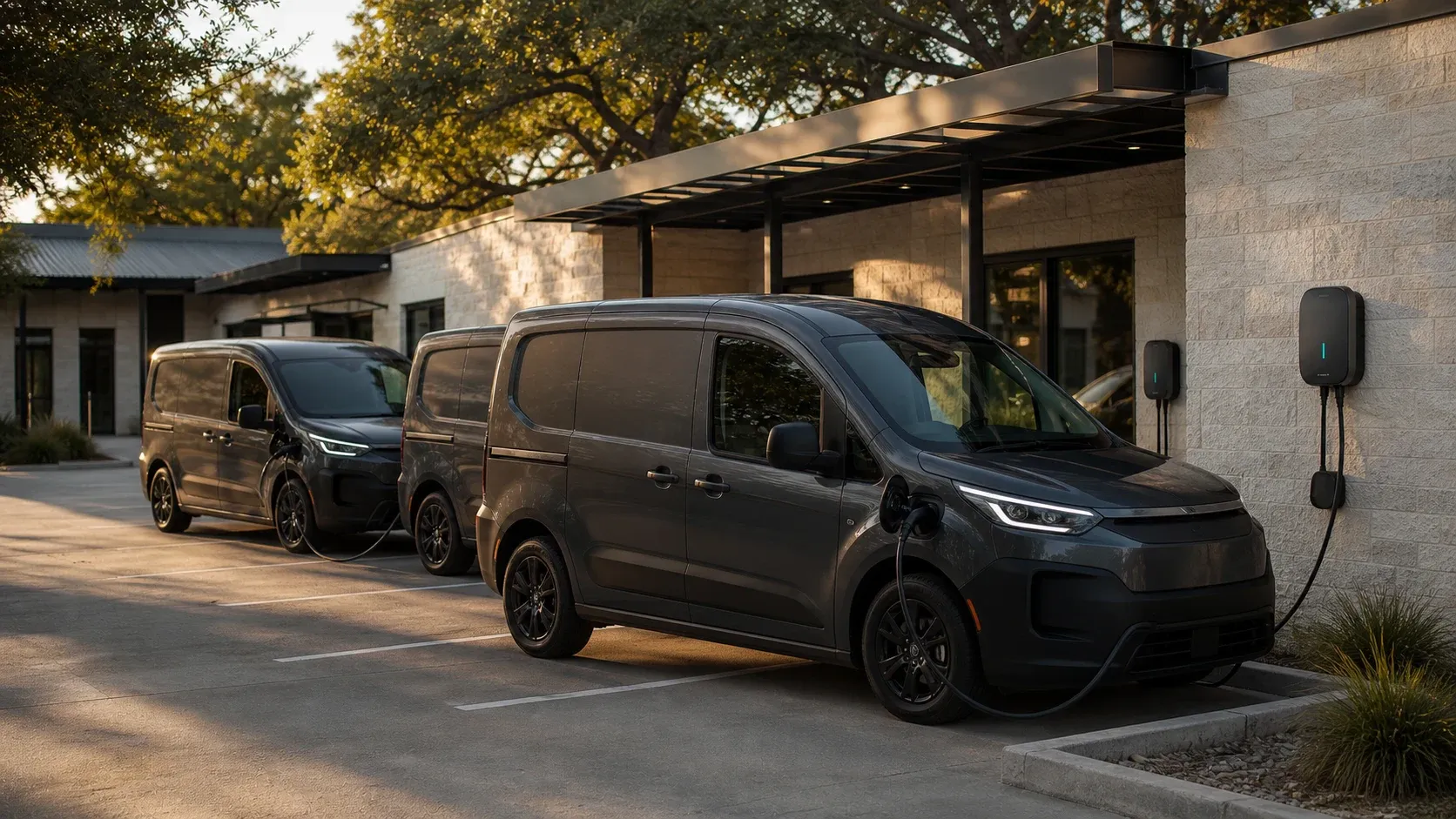
Fleet routes, return times, energy needs, and dispatch priorities drive the charging plan.
Employee and visitor charging needs access, turnover, pricing, and support rules.
Electrical, civil, and software plans should account for the next vehicle tranche.
For fleets, list vehicle classes, battery or usable-energy information if known, route energy, return and departure windows, parking assignment, seasonal conditions, and backup operating plans.
Employee, visitor, pool-vehicle, take-home fleet, and depot charging have different users and service expectations. Define access, turnover, pricing, reimbursement, and priority rules for each group.
Document electrical capacity, distribution distance, parking changes, trenching windows, network coverage, and operational limits on outages or construction. A qualified project team must validate the design.
Consider scheduling, load control, driver authentication, energy reporting, alerts, telematics integration, uptime expectations, and who supports drivers outside normal business hours.
Common questions
They can in some operating models, but user access, charging priority, dwell time, equipment, and reliability requirements should be planned explicitly.
The vehicle schedule and energy requirement should inform the equipment and power plan. Buying first can lock the project into the wrong assumptions.
Not yet. This page prepares the intake while provider coverage is verified.
Ready to prepare the request?