Assess before assuming
Panel age or appearance alone does not determine the answer.
Electrical capacity
An EV charger adds a significant planned load, but that does not mean every project needs a new panel. The useful first step is to document the existing service, major loads, charging goal, and circuit route for professional assessment.
Planning guidance first. Provider referral only with separate permission.
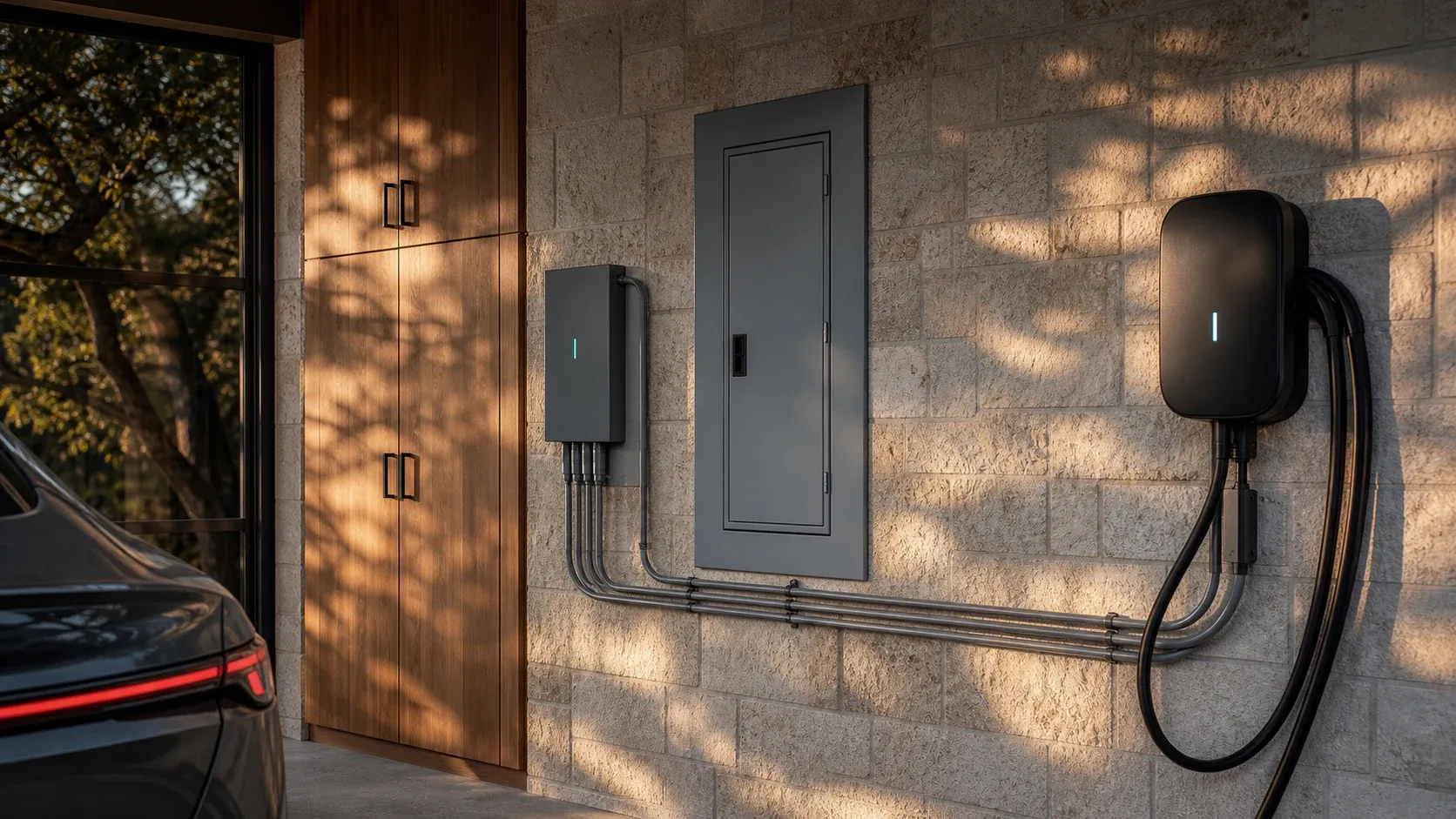
Panel age or appearance alone does not determine the answer.
A practical charging target can change the electrical options worth comparing.
Existing capacity, load management, and equipment changes may deserve evaluation.
Photograph the service equipment, main rating if visible, directory, open spaces, and major electric loads such as HVAC, water heating, cooking, pools, or other vehicle charging. Do not remove covers or touch energized equipment.
Share daily miles and typical parking time. A lower practical charging target may still replace daily driving overnight, while the final circuit decision belongs to the provider.
Load-management equipment may be one option in some homes. Compatibility, monitoring method, equipment listing, fail-safe behavior, charger support, and local approval should be verified for the specific project.
When a panel or service change is recommended, ask about utility coordination, permit and inspection steps, outage planning, equipment placement, and which costs are included in the scope.
Common questions
No. Service size alone does not answer the capacity question. The existing loads, charging plan, equipment, and applicable requirements need assessment.
It is a category of equipment and control strategies that can limit or coordinate charging in response to available electrical capacity. Suitability is project-specific.
Photos improve intake quality but may not replace measurements, load calculations, or an on-site assessment required by the provider.
Ready to prepare the request?