Charging outcome
Start with daily range needs and time parked instead of treating maximum power as the goal.
Faster home charging
Level 2 describes a category of charging, not one universal installation. The right home setup balances the vehicle, time parked, charger, circuit, available electrical capacity, and the physical route to the parking space.
Planning guidance first. Provider referral only with separate permission.
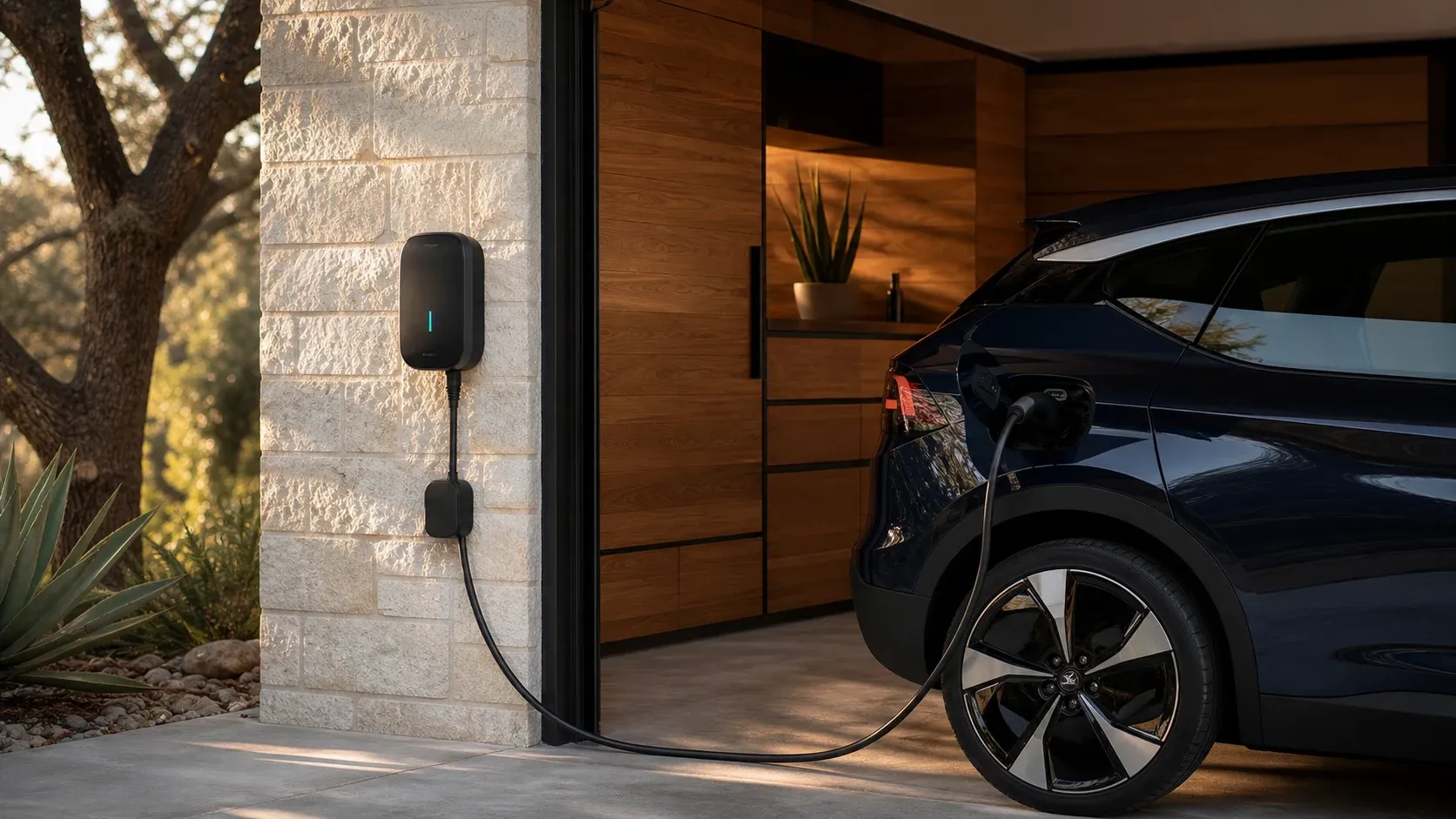
Start with daily range needs and time parked instead of treating maximum power as the goal.
Compare hardwired and plug-in configurations against the real site conditions.
Document the panel-to-parking route and let a qualified provider determine the circuit scope.
Estimate normal daily driving, overnight parking time, and whether more than one EV may share the charger. These details help frame a practical charging target.
A plug-in plan involves a compatible receptacle and location; a hardwired plan removes that connection point. Equipment instructions, local requirements, outdoor exposure, and expected permanence should be considered.
Share clear photos and an approximate distance, including finished walls, attic access, detached structures, or trenching. The provider still needs to verify capacity, conductor path, protection, and installation method.
Permit, inspection, utility, and incentive steps depend on the address. Ask which approvals are included in the provider's scope and what must happen before equipment is purchased.
Common questions
It is common, but the appropriate setup depends on driving needs, dwell time, vehicle capability, property conditions, and available electrical capacity.
Do not assume it can. A qualified provider should evaluate the circuit, receptacle, protection, location, condition, and charger requirements.
No. It prepares project context. Pricing and scope require an independent provider's assessment.
Ready to prepare the request?